
Australia’s Biggest Security Weakness Isn’t Military
A distant war is already working its way into Australia, exposing how thin the country really is when the pressure hits.

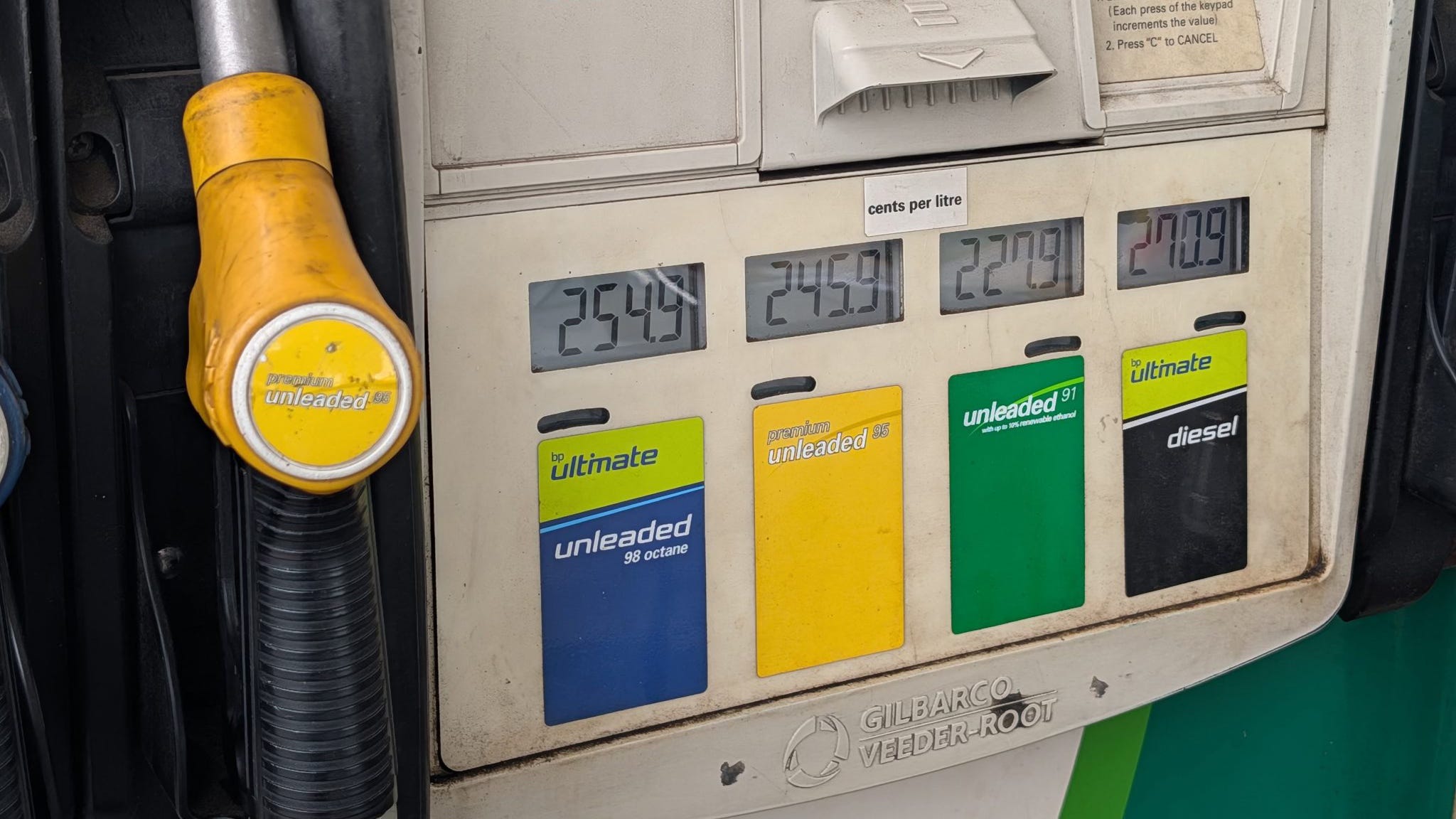
A war in the Gulf should not be able to reach into an Australian bowser, a supermarket checkout and a regional freight route this quickly.
But it can.
That is the part worth sitting with. Because for all the talk in this country about security, strength and sovereignty, Australia is still much thinner where it counts than it likes to admit.
Picture where this story lands first. Not in a briefing room. Not on a map. Not in the sort of television segment where serious people say, “geopolitical tensions” and move on. It lands at the servo. It lands in the freight invoice. It lands in the weekly shop. It lands in the quiet little calculations households are already too familiar with. The Strait of Hormuz carries about 20 per cent of global oil and LNG trade, and it has been badly disrupted. Brent has climbed back above US$102 a barrel. Governments are already dipping into reserves and scrambling to keep supply moving.
Now here’s the awkward bit.
Australia still likes talking like an energy power. We dig things up. We export them by the shipload. We like the feel of that story because it sounds big and strong and self-sufficient. But the part of the energy story that keeps the country moving is a lot less flattering. Australia imports about 900,000 barrels a day of fuel products and remains heavily dependent on imported refined fuel, especially diesel. Even after recent stock-building, the country is still sitting on only about 36 days of petrol, 34 days of diesel and 32 days of jet fuel. For a country this large, this spread out and this dependent on long supply lines, that is not much breathing room.
That is not a fortress. It is a country hoping the plumbing holds.
And this is the bit too much mainstream coverage glides past. This is not mainly a crude oil story. It is a refined fuel story. In Australia, that means diesel. Reuters reports refined fuels have been hit harder than crude, with Singapore gasoil up 57 per cent and jet fuel up 114 per cent since late February. Diesel does the hard work in this country. It moves freight, powers farm machinery, supports mining, keeps goods rolling across long distances and helps decide what everything else ends up costing. When diesel gets squeezed, the pain does not stay in the Gulf. It turns up in grocery prices, delivery costs, domestic travel and business overheads.
That is the real chain.
A shipping lane gets hit. Refined fuel tightens. Diesel gets squeezed. Freight costs rise. Farm costs rise. Delivery costs rise. Then households wear it at the bowser and the checkout and get told, once again, that global events are very complicated.
Some are.
This part is not.
A country this dependent on imported fuel products was always going to wear the hit. The only real surprise is how often Australia still talks as if distance is a strategy. It isn’t. Distance does not protect you when the basic machinery of daily life still runs through vulnerable global chokepoints. It just gives you a comforting story right up until the bill arrives.
Regional Australia will wear that bill first and hardest. That is how these shocks usually work. Longer distances, diesel-heavy operations, fewer alternatives and tighter margins mean country towns, farms, freight operators and regional industries feel the squeeze before the inner-city panel class has finished explaining why nobody should overreact.
Canberra clearly knows this. The government has already released petrol and diesel from emergency reserves and temporarily eased fuel standards for 60 days to push more supply into the market. The extra supply, channelled through Ampol, is expected to add another 100 million litres a month and was aimed at farmers, fishers and regional communities. Stop there and think about what that means. Governments do not start dipping into reserves and loosening standards because the system is humming. They do it because the strain is already showing.
That is not resilience. That is a patch-up.
And once you see it that way, the bigger problem comes into focus. Australia does not just have a defence question. It has a dependence problem. Because if one badly disrupted shipping lane can rattle fuel supply, freight costs, inflation nerves and household budgets within days, then a fair bit of the language around sovereignty starts sounding like theatre. A country that can be shoved off balance this easily is not nearly as secure as it keeps saying it is.
Then there is the alliance part, and that story is not especially flattering either. Donald Trump has been pressing allies to help reopen Hormuz. Australia has said it has no plans to send ships. Europe has shown little appetite to widen its own naval mission into the strait. That tells you the room has already read the situation. Plenty of US partners can see the danger of being asked to clean up a crisis they did not choose, were not properly consulted on and do not control.
But here is the sting. Even when Australia stays out of the room, it still wears the cost. Someone else lights the match. We still pay for the smoke. That is not much of a success story. It is dependence with better branding.
So, what should happen now? Australia needs to stop pretending national security lives only inside the Defence portfolio. It is also a fuel issue, a freight issue, a supply-chain issue and a resilience issue. Governments need to treat stockholdings, refining capacity, distribution and regional contingency planning as core national infrastructure, not boring admin left untouched until the next shock blows in. And the public should start judging security claims less by how polished the announcement sounds and more by a simpler test: when the world turns nasty, can the country still function?
That is the question underneath all of this.
Not whether the rhetoric sounds strong. Not whether the alliance language is tidy. Not whether the right people stood in front of the right flags.
Can the country still work?
Because that is what ordinary Australians live inside. Not strategy documents. Not summit communiqués. The country as it functions day to day. The freight routes. The fuel supply. The weekly shop. The quiet expectation that the basics will keep working.
This crisis is exposing how thin that expectation really is.
A serious country should not be discovering its weak spots halfway through somebody else’s war. Yet here we are, still mistaking military theatre for preparedness, still talking like distance will save us, still acting as if security is something you can perform at a podium while the machinery underneath the country is left too exposed.
National security is not just about what a nation can strike. It is about what it can still sustain.
Right now, this crisis is dragging an uncomfortable truth into daylight. Australia’s biggest weakness is not only what might happen in the air or at sea.
It is how quickly life on the ground starts wobbling when somebody else breaks the system.
🇦🇺
Join the conversation: Subscribe to ETLG for independent writing on Australian politics, geopolitics, and policy, with a clear focus on Australia’s future.
The accountability bit: I write independent, non-partisan commentary grounded in public information, national interest and common sense. My focus is the future of ordinary Australians. If I get a fact wrong, I’ll correct it.